AI is a good tool to create inclusive and invisible-friendly content. Some brands are already seeing this.
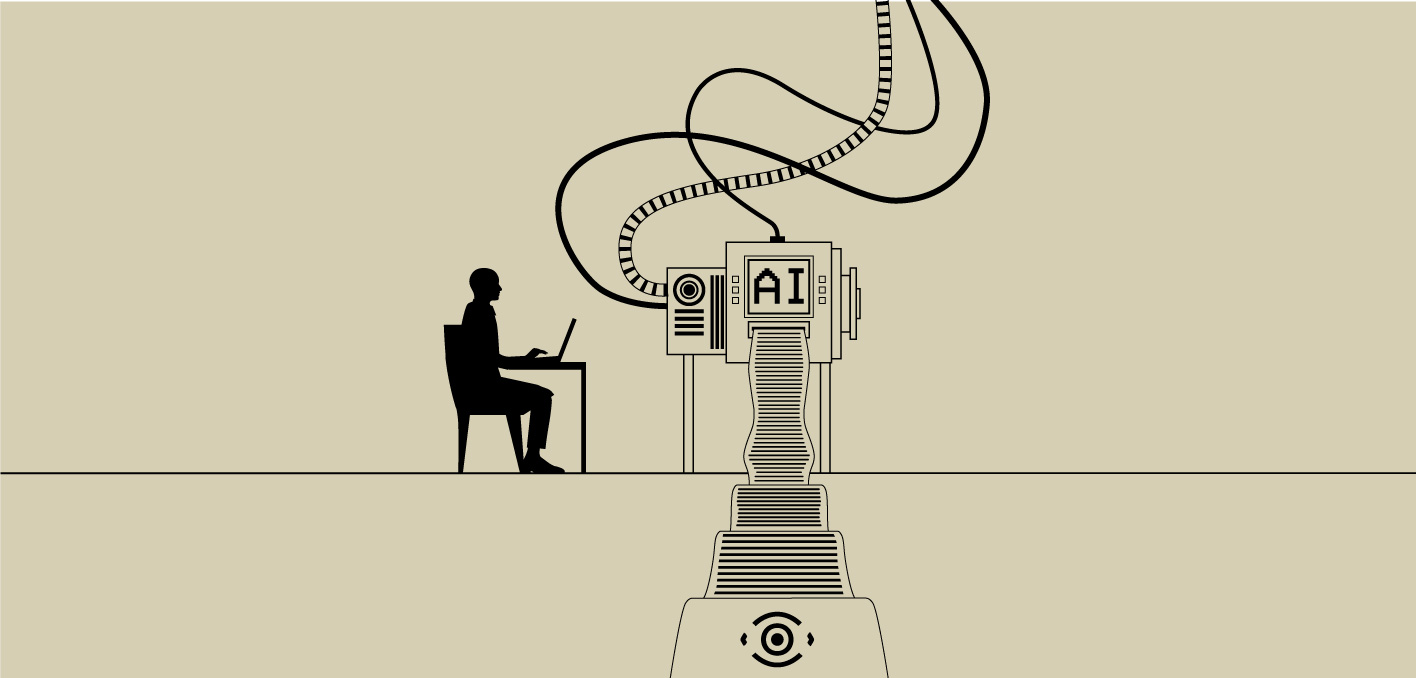
AI is a good tool to create inclusive and invisible-friendly content.
Some brands are already seeing this.
We overheard an interview conducted by The Drum with a great guest, Patrick Kane. We couldn't resist, and we're already explaining why. Well, The Drum is an iconic and one of the UK's most widely read platforms where you'll learn all about media, marketing and what's in the grass in general. Their motto: 'Marketing can change the world', is very close to our hearts because, as you know, changing the world is also our modest ambition.
We also admire and support Patrick Kane. He is a 25-year-old British public speaker, writer, ambassador and catalyst for change in the area of disability inclusion. He has been walking on a prosthetic leg since he was 14 months old and has had a bionic arm since he was 13. He was the youngest person ever to be fitted with such a prosthesis. Working at the global agency Wunderman Thompson loudly proclaims his views on the idea and practice of inclusion.
"Inclusion means creating a place where everyone can participate. A place where everyone is welcome and important.
It has to be done actively and consciously, because unconscious action has brought us to where we are today."
The interview with Patrick was conducted on the occasion of International Day of Persons with Disabilities 2021, and the topic was how Patrick believes brands can better reach them. We invite you to read on.
"People with disabilities, whose population is estimated at 1.85 billion, represent an emerging market the size of China and the European Union. Their friends and family add another 3.4 billion potential consumers who act on their emotional connection to people with disabilities. Together they control more than $13 trillion in annual revenue. This is not a market that brands can ignore.
That's why, as a person with a disability who has recently entered the advertising industry, I'm thrilled to see some brands and agencies making the most of new technologies to properly address diversity and inclusion. By 'appropriately' I mean that representation is not limited to an act of tokenism, patronisation or exploitation, but instead shines a light on real challenges with real stories and brings them into the public space where they need to be seen."
Indeed, there have been a number of recent campaigns that thoughtfully and appropriately include people with disabilities. The award-winning design work for Unilever's Degree Inclusive deodorant and, 'A Very Big Caveat' campaign show that if done right, they have huge potential to reach this audience to good effect.
As Daren Poole of Kantar said: "advertising is not a mirror of society, but it has the powerful ability to shape it", and if we consider technology as the foundation of today's advertising ecosystem, we have more power than ever before.
This has never been more true than when, in the wake of the Coronavirus outbreak, it was technology that helped us face up to the importance of available work. The situation forced companies around the world to try a work format that has long been familiar to the disability community. There are other examples in recent history showing how what was thought to be inclusive technology has become mainstream. The typewriter was invented so that a blind person could send letters, and the touchscreen was also developed for those who had difficulty pressing individual buttons.
So now that the representation of the disabled community is high on the marketing agenda - as with the truly inclusive campaigns cited above - how can technology help brands really follow the caller's voice?
In today's experience economy, dynamic, seamless and personalised digital experiences are expected. In fact, customer experience is the product, and every business is an experience business. Marketers are already grappling with the never-ending demand for the content needed to deliver customer experiences in an omni-channel world. Factor in compliance responsibilities - whether it's regulatory compliance, brand management or even channel compliance - and the task becomes even more daunting.
According to a B2B marketing survey conducted by Gleanster Researchand Upland Software, 92% of marketers cite approval delays as a reason for not meeting deadlines. Considering the content variants required for just one multi-channel, personalised campaign, this is not surprising. If one considers the scale, for example, globally, the challenge is enormous.
However, thanks to artificial intelligence (AI) and machine learning, brands can now ensure the variety and accessibility of their content and ensure its quality and consistency. Tools such as WPP Open Brand Guardian, created by Wunderman-Thompson, are helping brands to drive inclusive representation with much greater speed and scale than was previously possible.
Brand Guardian is an AI-based platform that enables marketing, creative and production teams to comprehensively manage content quality at scale. It connects to existing creative and content toolkits and reviews assets such as images, video and text to provide insight into how inclusive and accessible they are. This means that diversity and innovation can be incorporated into the creative process from the outset, helping brands to ensure better representation throughout their work.
It has not been known for a long time that necessity is the mother of invention. This remains true, but the pace of change and the extent of invention we are seeing shows that we are finally realising how necessary change is. As tools such as artificial intelligence become ubiquitous, it is our collective responsibility to make sure we use them to firmly establish ourselves in the DNA of the brand, so that we can build brands that resonate with and connect with all customers.
"We need to actively confront reality and change it so that we don't end up where we are. I think this needs to be done quite drastically.
It's important because for a very long time the concepts of 'success' and 'correctness' went hand in hand. Now we see that this is wrong, because while it benefits one group of people, it doesn't benefit anyone outside of that group, and it leads to huge disparities and inequalities.
Therefore, a more open and inclusive world benefits everyone."